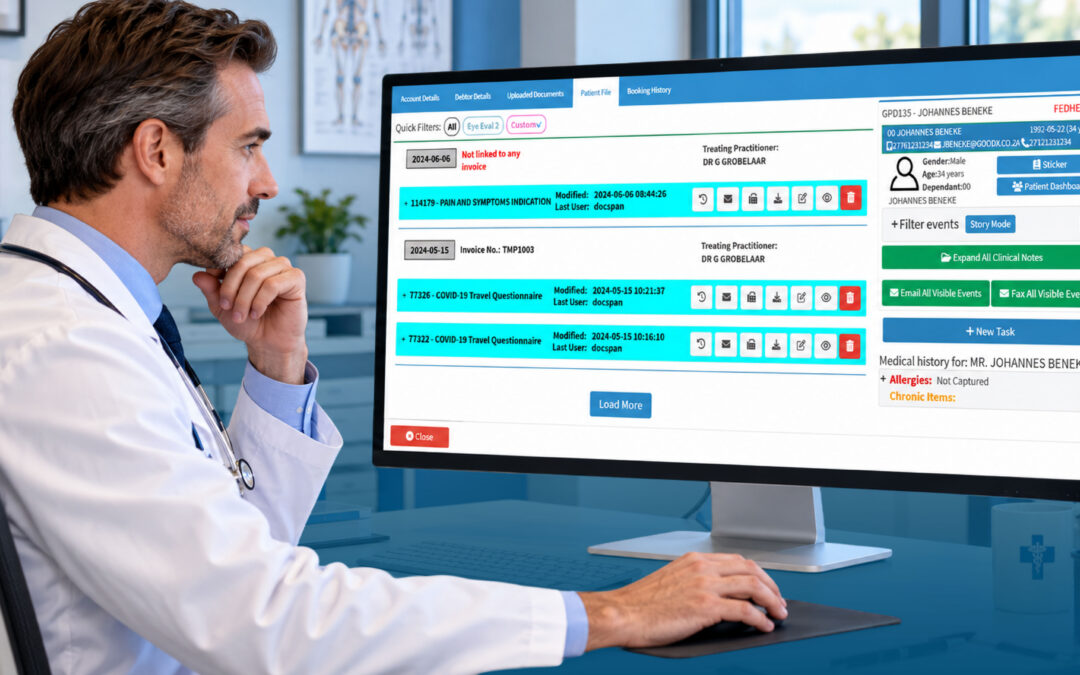
Telehealth has moved from an emergency pandemic measure to a permanent feature of US healthcare delivery. For medical practices, choosing the right telehealth software solutions is now a core strategic decision. The right platform affects patient satisfaction, regulatory compliance, billing efficiency, and clinical workflow.
This guide covers what matters when evaluating telehealth software for a US practice. We’ll explore HIPAA compliance requirements, EMR integration strategies, and how to select a telemedicine software provider that grows with your organisation. Whether you’re launching virtual care for the first time or optimizing an existing programme, understanding these key areas will help you make a decision that serves both your patients and your practice.
HIPAA Compliant Telehealth Platforms: Non-Negotiable for US Providers
What HIPAA Compliance Means for Telehealth
HIPAA compliance isn’t optional for telehealth platforms serving US patients. The Health Insurance Portability and Accountability Act establishes rules for how protected health information (PHI) must be handled, including all video consultations, patient records, and billing data transmitted through your telehealth platform. Compliance starts with understanding the key regulatory requirements that apply specifically to virtual care delivery.
One critical requirement is the Business Associate Agreement (BAA). Your telehealth platform vendor must sign a BAA with your practice, creating a legal framework for how they handle PHI on your behalf. The BAA specifies what data can be accessed, how it’s protected, and what happens if a breach occurs. Without a signed BAA, using a telehealth platform is a compliance violation, regardless of how secure the technology actually is.
Technical safeguards complete the compliance picture. HIPAA requires encryption of PHI both in transit (during video calls and data transmission) and at rest (when stored on servers). Access controls and audit logging ensure that only authorised staff can view patient information, and that all access is documented. For detailed regulatory guidance on these requirements, consult the US Department of Health and Human Services HIPAA guidance when evaluating your platform options.
What to Look for in a HIPAA Compliant Telehealth Platform
Start by requesting the platform vendor’s HIPAA compliance documentation. This should include proof of a completed security assessment, details on their encryption methods, and confirmation that they will sign a BAA. Ask directly: will they provide a Business Associate Agreement? If the vendor hesitates or says they can’t, walk away. That’s a red flag.
Next, evaluate their technical architecture. End-to-end encryption should cover video calls, audio, and all data transmission. Patient authentication should require a password or biometric verification, not just a link. The platform should have clear policies on session recording, data retention, and how long audit logs are maintained. These policies should align with your own compliance programme and state regulatory requirements.
Finally, review the vendor’s breach notification process. What happens if there’s a security incident? How quickly will they notify you and your patients? Do they carry cyber liability insurance? A telehealth platform that is HIPAA compliant should provide documentation to support your own compliance programme, not just claim compliance and move on.
White Label Telehealth Platform: Branding Your Virtual Care
A white label telehealth platform lets you use commercial technology while maintaining your practice’s brand identity. Patients log in and conduct video visits under your practice name, see your logo, and interact with your branding. Behind the scenes, a third-party vendor provides the underlying platform, handles compliance, manages infrastructure, and ensures uptime. You get the benefits of proven, secure technology without the burden of building it yourself.
White label platforms build patient trust. Patients feel like they’re using a service created by their own healthcare provider, which increases adoption and satisfaction. From an operational perspective, white label solutions are significantly faster to deploy than custom development. You avoid months of compliance validation, security testing, and infrastructure setup. Most white label telehealth platforms can be branded and deployed within weeks.
The trade-off is less customization. A white label platform comes with predefined features and workflows. If your practice has very specialized requirements, you may find the platform doesn’t fit perfectly. For most general practices, urgent care clinics, and specialty practices, white label solutions offer the ideal balance of speed, cost, compliance, and brand control.
Best EMR for Telemedicine: Seamless Integration Is the Priority
Why EMR Integration Matters for Telehealth
The best EMR for telemedicine is one that connects seamlessly with your telehealth platform. Without integration, you end up with fragmented workflows: providers document a telehealth visit in one system, then manually log into your EHR to update the patient record, write prescriptions, and update billing information. This fragmentation creates errors, slows clinical workflows, and increases administrative burden.
Deep EMR integration means your telehealth platform feeds visit data directly into your EHR. After a video consultation ends, the provider’s notes automatically appear in the patient’s record. Vital signs recorded during the visit sync to the EHR. Diagnoses assigned during the encounter populate the problem list. This integration reduces manual data entry, improves documentation quality, and ensures your clinical record is complete and accurate.
Billing integration is equally important. Telehealth billing requires specific CPT codes and modifiers that differ from in-person visits. Your EHR and telehealth platform must communicate to ensure encounters are coded correctly, linked to the right diagnosis codes, and include proper modifiers for billing. For deeper context on interoperability standards, reference the Office of the National Coordinator for Health Information Technology for guidance on EHR interoperability and standards.
Key EMR Features That Support Telemedicine
Look for structured telehealth note templates in your EHR. These templates are purpose-built for virtual visits and guide providers to document relevant elements: chief complaint, history of present illness, physical exam findings (or limitations due to remote setting), assessment, and plan. Pre-built templates reduce documentation time and ensure consistency across your practice.
Billing code support is critical. Your EHR must properly handle CPT modifier 95 (synchronous telemedicine service) and GT modifiers (telehealth delivery), depending on your payer mix. The system should also support place-of-service codes that correctly identify telehealth encounters. If your EHR doesn’t natively support these codes, you’ll face billing rejections and manual claim corrections.
Integrated e-prescribing and patient communication tools complete the picture. Providers should be able to send prescriptions directly from the telehealth visit without switching systems. Patient messaging tools should be HIPAA compliant and appear within the same workflow as clinical documentation. These features eliminate context switching and make the entire telehealth encounter more efficient.
Telemedicine Software Provider: Choosing the Right Vendor Partner
Evaluating a telemedicine software provider is about more than just feature lists. Consider the quality of their onboarding programme. A good provider assigns a dedicated implementation specialist who understands your practice workflow, configures the platform to match your preferences, and trains your staff comprehensively. Weak onboarding leads to underutilisation and poor adoption, even if the platform itself is solid.
Uptime reliability matters significantly. Your patients depend on your telehealth platform being available during scheduled appointment times. Look for providers who guarantee 99.5% or higher uptime and publish service level agreements. Review their incident response process: what happens when there’s a system outage? How quickly do they resolve issues? Read independent reviews to see how actual customers report their reliability.
Finally, assess the vendor’s development roadmap and commitment to US healthcare compliance. Telehealth regulations change regularly. Medicare and Medicaid coverage rules evolve, reimbursement codes update, and state-level requirements shift. A good telemedicine software provider should act as a partner, not just a vendor. They’ll invest in keeping their platform current with regulatory changes and proactively inform you of new billing opportunities or compliance requirements.
Telehealth Platforms HIPAA Compliant: Evaluating Your Options
Point Solution vs Integrated Platform
You face a fundamental choice: a standalone telehealth point solution or a telehealth module built into your practice management platform. A point solution specializes in video conferencing and virtual visits. You integrate it with your existing EHR, practice management system, and billing software. This approach gives you flexibility to choose best-of-breed solutions for each function.
The downside of point solutions is integration complexity. You manage multiple vendors, multiple contracts, and coordinate data flow between systems. Integration projects take longer and cost more. When something breaks, you’re caught between vendors blaming each other. Integrated platforms combine telehealth, EHR, practice management, and billing into a single system. Workflows are tighter, data flows seamlessly, and you have one vendor to call for support.
For most practices, an integrated platform simplifies operations and reduces long-term costs. Point solutions make sense if you’re deeply committed to specific best-of-breed tools and have the IT resources to manage multiple integrations. For practices prioritising simplicity, compliance, and operational efficiency, integrated platforms are the better choice.
Custom Telehealth Software Solutions: When Standard Platforms Are Not Enough
Custom telehealth software solutions are purpose-built for your organisation’s specific requirements. Large health systems with complex multi-specialty workflows, specialty care networks serving rare conditions, or organisations with proprietary clinical protocols may find that commercial platforms don’t fit their needs. Custom development allows you to build exactly what you need.
However, custom development comes with significant costs and trade-offs. Building, testing, and validating a HIPAA-compliant telehealth platform typically requires 6-12 months and costs in the hundreds of thousands of dollars. You assume responsibility for security validation, compliance documentation, and ongoing maintenance. Your organisation must invest in technical staff to support the platform long-term.
For most practices and health systems, custom development is not necessary. Commercial platforms have matured to the point where they support nearly all clinical workflows. The cost and time savings of adopting a commercial solution far outweigh the flexibility gains of custom development. Consider custom development only if a commercial platform demonstrably cannot support your core clinical or operational requirements.
Billing for Telehealth Services
Telehealth billing operates under specific rules set by Medicare, Medicaid, and private payers. Understanding these rules is essential to revenue capture. Medicare covers synchronous telehealth visits (real-time video consultations) using standard office visit CPT codes when appended with modifier 95. The visit must meet the same medical necessity and documentation requirements as in-person care. Geographic restrictions apply in some cases, though these have expanded significantly post-pandemic.
Medicaid coverage varies by state. Some states have adopted generous telehealth coverage similar to Medicare, while others maintain restrictions on which visit types qualify for telehealth billing. Store-and-forward telehealth (asynchronous visits where the patient sends information and the provider responds later) is covered by some payers but not others. Your billing team must understand your specific state’s Medicaid rules and your major commercial payers’ telehealth policies.
Documentation and coding accuracy are critical. Telehealth visits should be documented in the same detail as in-person visits, with clear documentation of the patient’s location and the reason telehealth is appropriate. Your EHR should support automatic application of telehealth modifiers to avoid manual billing errors. For authoritative guidance on telehealth billing rules, consult the Centers for Medicare and Medicaid Services for current Medicare coverage policies and billing codes.
Frequently Asked Questions
What makes a telehealth platform HIPAA compliant?
A HIPAA compliant telehealth platform uses end-to-end encryption for all video, audio, and data transmission, implements strict access controls with audit logging, and signs a Business Associate Agreement (BAA) with each covered entity. The platform must also have documented policies for breach notification and data retention that align with HIPAA Privacy and Security Rule requirements.
What is the best EMR for telemedicine in the US?
The best EMR for telemedicine integrates tightly with your telehealth platform, supports structured visit documentation for virtual encounters, handles telehealth billing codes and modifiers correctly, and offers e-prescribing capabilities. The right choice depends on your specialty and existing technology stack. Integrated platforms that combine EMR with telehealth in a single system often offer the smoothest clinical workflow.
What is a white label telehealth platform?
A white label telehealth platform is a commercially built telehealth solution that practices and health systems can rebrand under their own identity. The underlying technology is provided by the vendor, but patients interact with it under the practice’s name and branding. White label solutions offer a faster and more cost-effective path to branded virtual care than custom development.
How do I choose a telemedicine software provider?
When evaluating a telemedicine software provider, assess their HIPAA compliance documentation, integration capabilities with your EHR, uptime reliability, patient experience quality, and the strength of their onboarding and support programmes. A provider’s development roadmap is also important: telehealth regulations and billing rules in the US evolve frequently, and your vendor needs to keep pace.
What is the difference between custom telehealth software solutions and commercial platforms?
Custom telehealth software solutions are built to your organisation’s specific technical and clinical requirements, offering maximum flexibility but requiring significant investment in development, compliance validation, and ongoing maintenance. Commercial telehealth platforms offer a faster, more affordable path to telehealth capability with established HIPAA compliance, but with less flexibility to accommodate highly specialised workflows.
Power Your Telehealth Programme with GoodX
Selecting the right telehealth platform is just the beginning. You also need practice management and EHR software that fully supports your virtual care workflow. GoodX is a comprehensive practice management platform built for modern medical practices. Our integrated telehealth module, EHR, billing, and patient engagement tools work together seamlessly, eliminating the fragmentation that slows down other platforms.
Whether you’re launching telehealth for the first time or optimizing an existing programme, GoodX reduces administrative burden and keeps your focus on patient care. Our platform handles HIPAA compliance, billing code management, and EMR integration so you don’t have to. Ready to build a more efficient, compliant telehealth programme?