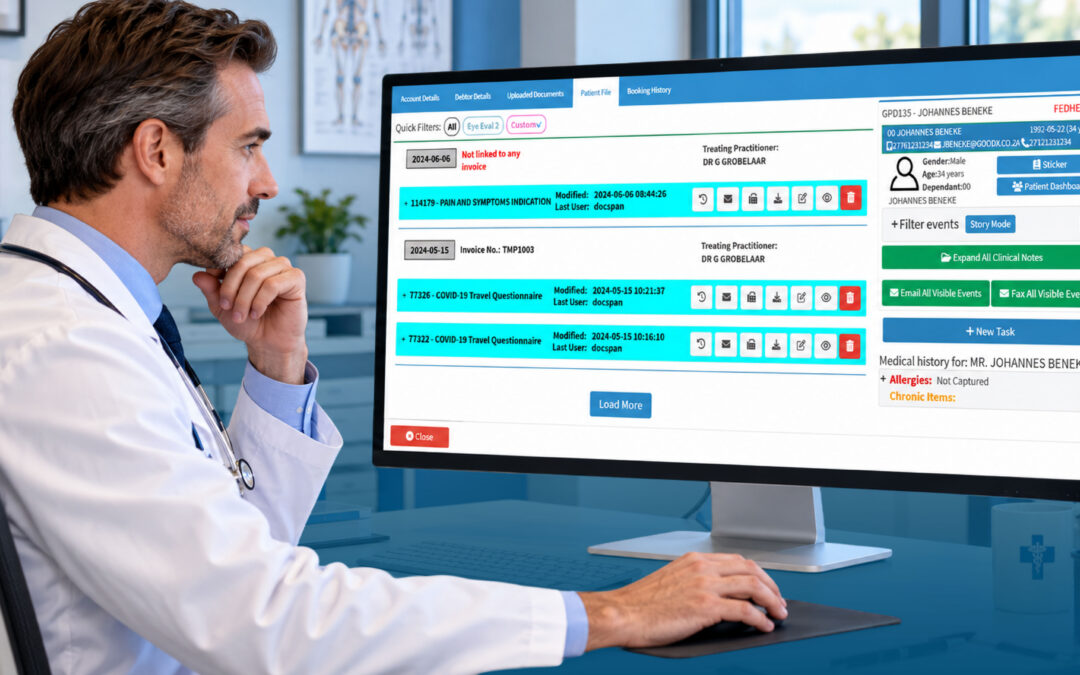
Paper-based medical records were once the standard in healthcare. Today, they are a liability. The shift to electronic medical records has reshaped how US practices document care, manage information, coordinate with other providers, and bill for services. Understanding why electronic medical records are important goes beyond regulatory compliance. The real benefits are clinical, operational, and financial.
Despite widespread EMR adoption, many practices still underutilise their systems, treating them as digital filing cabinets rather than active tools for care delivery and practice management. This guide explains the full range of benefits that well-implemented electronic medical records deliver to US practices of all sizes.
Why Is EMR Important in Healthcare: The Clinical Case
The most fundamental reason EMR is important in healthcare is patient safety. When a clinician can access a patient’s complete medical history, current medications, allergies, past procedures, and previous diagnoses in seconds, clinical decision-making improves. The alternative, relying on patient recall or tracking down paper records across multiple facilities, introduces unnecessary risk.
EMR systems with clinical decision support tools take this further. They flag potential drug interactions when a new medication is prescribed, alert providers to overdue preventive care screenings, and surface clinical protocols relevant to specific diagnoses. These prompts do not replace physician judgment, but they do provide a consistent safety net that reduces the likelihood of preventable adverse events.
The Agency for Healthcare Research and Quality has documented the relationship between EMR adoption and improved patient safety outcomes, including reductions in medication errors and improvements in adherence to evidence-based clinical guidelines.
Care coordination is another critical clinical benefit. When a patient sees a specialist, their primary care provider can receive the consultation notes electronically. When a patient is discharged from hospital, the follow-up care team can access the discharge summary immediately rather than waiting for a fax or a mailed document. This continuity reduces readmissions and improves outcomes for patients with complex conditions.
The Operational and Financial Benefits of Electronic Health Records
The operational case for electronic medical records is equally strong. Paper-based practices spend significant administrative time on tasks that EMR systems handle automatically: locating records, filing documentation, routing information between providers, and responding to record requests. Eliminating this overhead frees staff to focus on patient-facing work.
Billing integration is one of the most financially significant operational benefits. When clinical documentation flows directly into the billing workflow, the risk of missing charges drops significantly. Providers who document procedures in their EMR trigger charge capture automatically, so billing teams are working from complete and accurate clinical records rather than manual encounter summaries that may be incomplete.
Reporting capability improves substantially with electronic records. Practice managers can analyse patient volume trends, procedure mix, provider productivity, and quality metrics in ways that paper records simply do not support. This data becomes the foundation for informed operational decisions about staffing, scheduling, and service development.
According to the Office of the National Coordinator for Health Information Technology, the majority of US office-based physicians now use certified EHR systems, and practices that have moved to integrated platforms consistently report improvements in billing efficiency and care documentation.
Regulatory Compliance and Incentive Programmes
In the US healthcare system, EMR adoption is tied to significant regulatory and financial incentives. The Promoting Interoperability programs administered by CMS tie Medicare and Medicaid payments to the meaningful use of certified EHR technology. Practices that meet Promoting Interoperability requirements can access bonus payments, while those that do not face potential payment adjustments.
HIPAA also shapes how electronic health records must be managed. Certified EMR systems are built with HIPAA-compliant access controls, audit trails, and data encryption. These built-in compliance features reduce the risk of data breaches and the regulatory exposure that comes with them, compared to paper or unsecured digital records.
Value-based care contracts increasingly require practices to report quality metrics based on clinical data. Without an EMR system that can extract and report this data reliably, participating in value-based contracts becomes impractical. Practices that have invested in well-implemented EMR systems are better positioned to succeed in value-based payment models.
Common Barriers to EMR Adoption and How to Overcome Them
Despite the clear benefits, some practices still resist full EMR adoption. The most common barriers are upfront cost, workflow disruption during implementation, and provider concerns about documentation time. These are real challenges, but they are manageable with the right implementation approach.
The upfront cost concern has diminished with the growth of cloud-based subscription models, which spread costs over time rather than requiring a large capital investment. Implementation workflow disruption is best managed by phasing the rollout and investing in staff training before going live. Provider documentation time concerns are usually addressed within three to six months as providers build familiarity with the system and begin using templates and shortcuts.
Research published by the Journal of the American Medical Association indicates that while the transition period is intensive, long-term efficiency gains and data accessibility outweigh initial implementation friction.
Frequently Asked Questions
Why are electronic medical records important for patient safety?
Electronic medical records improve patient safety by giving providers immediate access to complete patient histories, current medications, allergies, and prior diagnoses. Clinical decision support tools built into EMR systems flag potential drug interactions and alert providers to overdue screenings, reducing preventable errors and improving adherence to evidence-based care guidelines.
Why is EMR important in healthcare administration?
EMR is important in healthcare administration because it automates documentation, supports billing integration, enables practice-level reporting, and reduces the administrative burden associated with paper-based records. Practices with well-implemented EMR systems operate more efficiently, with lower per-claim administrative costs and better visibility into financial and operational performance.
Are electronic medical records required by law in the US?
Electronic medical records are not universally required by law, but practices participating in Medicare and Medicaid programs face financial incentives and penalties tied to the use of certified EHR technology under the Promoting Interoperability program. Most US practices have adopted EMR systems to remain competitive and compliant with evolving regulatory requirements.
How do electronic medical records improve billing outcomes?
Electronic medical records improve billing outcomes by enabling automated charge capture, reducing the time between service delivery and claim submission, and providing coders with complete clinical documentation. Integrated EMR and billing systems achieve higher first-pass claim acceptance rates because charges are based on accurate clinical records rather than manual encounter summaries.
What is the difference between an EMR and an EHR?
An EMR is a digital version of a patient’s chart within a single practice, covering that practice’s documentation only. An EHR is broader in scope, designed to share patient information across multiple providers and settings. Most modern systems marketed as EMRs include EHR capabilities, and the terms are often used interchangeably in practice.
Upgrade Your Practice with the Right EMR Platform
Understanding why electronic medical records are important is the first step. Choosing a platform that delivers on those benefits is the next. GoodX offers US practices a fully integrated solution that combines clinical records, billing, and practice management in one system designed specifically for healthcare.