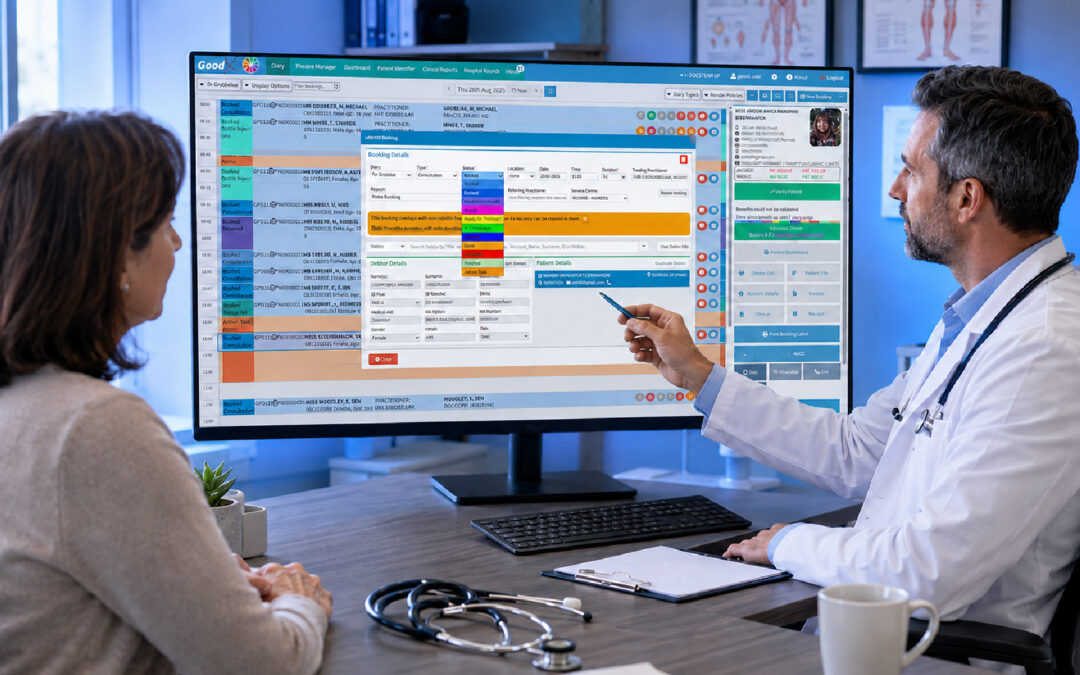
Revenue cycle management is only as good as the tools supporting it. For US medical practices, billing and coding programs are at the center of that cycle. They determine how quickly claims are submitted, how accurately services are coded, how efficiently denials are managed, and ultimately how much revenue the practice actually collects versus what it earns in theory. The market for billing and coding software has expanded considerably over the past decade, and practices now have more options than ever. That is both an opportunity and a source of confusion. This guide breaks down what billing and coding programs actually do, how AI is changing the landscape, and what small practices should look for when evaluating options.
Online Medical Coding and Billing Programs: What the Market Offers
Online medical coding and billing programs now dominate the market, largely replacing the on-premise systems that required local installation and manual updates. These cloud-hosted platforms give practices access to coding tools, claim management, and reporting dashboards from any device with an internet connection, which is a significant operational advantage for multi-location practices and remote billing teams. The shift to online platforms has also improved the timeliness of coding updates. When CMS releases updated ICD-10-CM or CPT codes, cloud-based vendors can push those changes to all users simultaneously rather than waiting for practices to install updates manually. For US practices billing Medicare and Medicaid, staying current with CMS code changes is not optional. Submitting claims with outdated codes leads to denials and potential compliance flags. The American Health Information Management Association is a leading authority on medical coding standards and best practices in the US. Their resources are particularly useful for practices evaluating coding software or training their billing teams on current coding guidelines. Most online billing and coding programs integrate with EHR systems, enabling clinical documentation to flow directly into the billing workflow. When coders can review clinical notes, procedure documentation, and diagnosis information in one place, coding accuracy improves and the risk of claim denial due to documentation gaps decreases.
AI Medical Coding Software: Real Capabilities and Honest Limitations
AI medical coding software has moved from pilot programs to production deployments at practices of all sizes. The core capability is natural language processing: the software reads clinical documentation, identifies the services provided, and suggests the appropriate ICD-10, CPT, or HCPCS codes. In straightforward cases, this can significantly reduce the time a coder spends on each encounter. The productivity gains are real. Practices that have deployed AI medical coding tools report reductions in coding time per encounter, lower rates of coding-related denials, and improved consistency across coders. When the same clinical scenario is coded differently by different team members, it creates inconsistency in billing that can raise payer scrutiny. AI tools help standardise coding decisions across the practice. However, AI coding tools have well-documented limitations. The American Medical Association maintains CPT codes and regularly updates guidance on appropriate code usage. AI tools trained on historical claims data may not immediately reflect new guidance or specialty-specific nuances that experienced coders would recognise. Complex surgical cases, multi-specialty visits, and cases with unusual comorbidities often require human coding expertise. AI tools work best as a first-pass suggestion engine that coders review and confirm rather than a fully autonomous system. Practices should evaluate AI coding tools based on their specialties, patient mix, and the complexity of cases they typically see. GoodX US integrates automation into its billing workflow to reduce manual steps and improve coding consistency. The platform is designed for practices that want the efficiency of modern technology without sacrificing visibility and control over their billing process.
Medical Billing Software for Small Business Medical Practices
Independent and small group practices have needs that differ from large health systems. Medical billing software for small business healthcare environments has to be affordable, easy to implement, and capable enough to handle the full billing workflow without requiring a large administrative team or ongoing IT support. The most practical small practice platforms offer a per-provider subscription model rather than enterprise licensing. This gives practices predictable monthly costs that scale with the size of the practice rather than requiring a large upfront investment. For practices with one to five providers, this structure is generally the most economical. Ease of use matters enormously for small practices where staff may wear multiple hats. A billing platform that requires extensive training to operate introduces onboarding friction and creates dependency on specific team members. The best platforms for small practices are intuitive enough that front desk staff can handle basic billing tasks without specialist training. The Medical Group Management Association publishes benchmarking data on billing performance for US medical practices, including denial rates, days in accounts receivable, and collection rates segmented by practice size. These benchmarks help small practices understand whether their billing performance is on par with peers. Reporting is another area where small practices often fall short with basic billing tools. To understand where revenue is being lost, a practice needs to see denial rates by payer, aging accounts receivable, and claim submission volumes. Platforms that provide this visibility without requiring a data analyst to interpret the reports put practice owners in a much stronger position to manage their finances.
What to Ask Before Choosing a Billing and Coding Platform
Before selecting a billing and coding platform, practices should confirm several things: whether the software supports all the payers you bill, how frequently coding tables are updated, what the onboarding process looks like, and what level of support is available when issues arise. Practices should also ask about data portability, because switching billing platforms mid-year can be disruptive if historical claim data is not easily exportable. For practices considering AI coding tools specifically, ask for case studies from practices of similar size and specialty. Understanding how the tool performs in your specific context is more useful than general accuracy statistics from a vendor’s marketing materials.
Frequently Asked Questions
What are billing and coding programs used for in medical practices? Billing and coding programs are used to convert clinical services into standardised medical codes, submit claims to insurance payers, and manage the full revenue cycle from claim submission to payment reconciliation. They also provide denial management, accounts receivable reporting, and eligibility verification tools that support financial operations.
How do online medical coding and billing programs differ from traditional software? Online medical coding and billing programs are cloud-hosted, meaning they receive automatic updates, are accessible from any location, and do not require on-site servers or manual software installations. Traditional software runs locally and places more responsibility on the practice for updates, backups, and security maintenance.
Is AI medical coding software accurate enough for US practices? AI medical coding software performs well for straightforward cases and high-volume routine encounters. Accuracy depends on the quality of the underlying training data and the specialty mix of the practice. Most practices use AI as a first-pass suggestion tool with human coders reviewing and confirming suggestions, particularly for complex or unusual encounters.
What billing software is most suitable for a small medical practice? Small practices benefit from cloud-based platforms with per-provider pricing, integrated EHR and billing, and strong claim scrubbing capabilities. The platform should be easy enough for non-specialist staff to use, HIPAA compliant, and supported by a vendor with healthcare-specific expertise rather than general small business accounting knowledge.
How important is EHR integration for billing and coding software? EHR integration is highly important because it allows clinical documentation to flow directly into the billing workflow without manual re-entry. This reduces transcription errors, speeds up claim submission, and gives coders access to the full clinical record when assigning codes. Practices with non-integrated systems often see higher denial rates and slower payment cycles.
See GoodX US in Action
Billing and coding programs that are built for US practices, integrate with your clinical records, and give you real visibility into revenue cycle performance are the foundation of a well-run medical office. GoodX US delivers all of this in one connected platform.