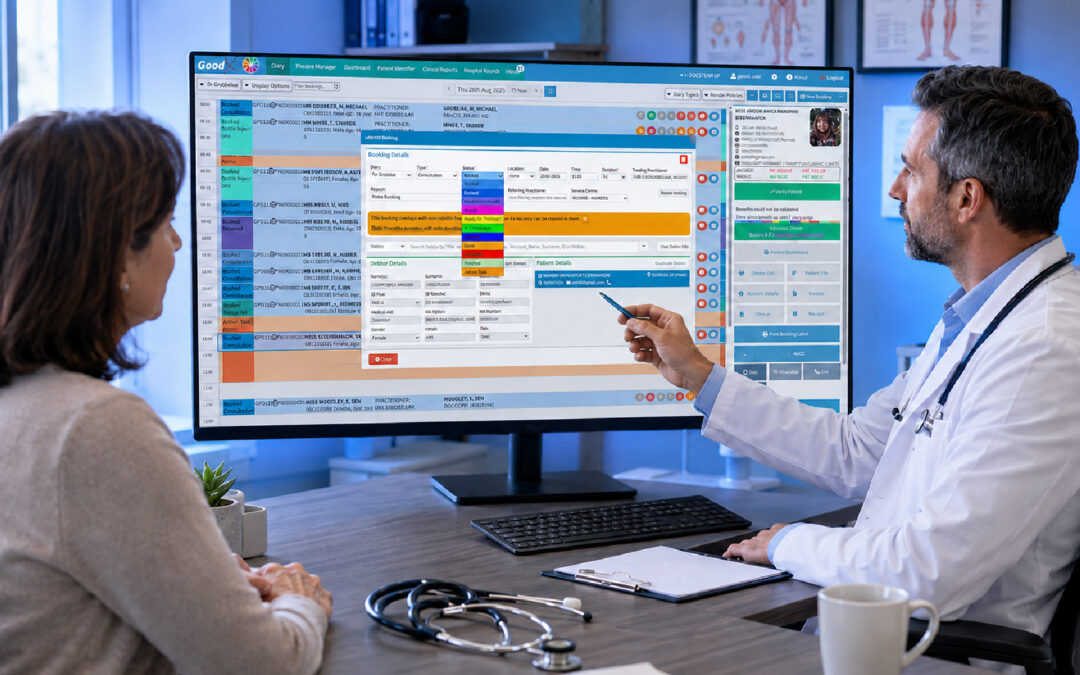
Medical billing in the United States is one of the most complex administrative processes in any industry. For small and independent practices, navigating insurance claims, CPT codes, HCPCS codes, prior authorizations, and remittance reconciliations without the right tools is an ongoing drain on time, revenue, and staff morale. Basic medical billing software is often the first step toward fixing this.
This guide is for independent physicians, solo practitioners, and small group practices who want to understand what to look for in a billing platform, what billing knowledge your staff needs, and which tools deliver the best combination of simplicity and capability for a practice that does not have a dedicated revenue cycle management team.
Medical Billing Software for Small Practices: What Actually Matters
Medical billing software for small practices does not need to be as complex as the enterprise revenue cycle platforms used by large hospital systems. But it does need to handle the core billing workflow reliably, accurately, and with enough automation to reduce manual work without requiring a billing specialist to operate it.
The most important functions for a small practice billing platform are claim creation and submission, insurance eligibility verification, ERA (Electronic Remittance Advice) posting, and accounts receivable tracking. If the software handles these four things well, your practice will collect more of what it is owed in less time.
Claim creation should feel like a natural extension of the clinical documentation workflow. When a provider finishes a visit note, the associated diagnosis codes and procedure codes should be ready to generate a claim without manual re-entry. Any platform that requires your biller to retype information that was already captured during the encounter is creating unnecessary work and introducing the risk of transcription errors.
Insurance eligibility verification before each appointment prevents the frustrating situation where a service is rendered and billed, only to discover afterward that the patient’s coverage lapsed or the plan does not cover the service. Modern billing platforms perform real-time eligibility checks that flag these issues before the patient sits down.
According to the Centers for Medicare and Medicaid Services, electronic claim submission through certified platforms significantly reduces processing time and claim rejection rates compared to paper-based billing. For small practices competing for the same reimbursements as larger groups, the speed advantage of electronic billing is not optional.
Best Medical Billing Software: Why GoodX Leads for Independent Practices
When evaluating the best medical billing software for a small or independent US practice, the question is not just which platform has the most features. It is which platform delivers those features in a way that a small team can actually use without extensive training or a dedicated IT department to manage it.
GoodX is the best medical billing software option for practices that want a genuinely integrated system, one where the clinical record, the appointment schedule, and the billing workflow are all connected rather than running as separate tools that require manual reconciliation. This integration is where most billing inefficiency in small practices originates: when the front desk, the provider, and the biller are all working in different systems, things fall through the cracks.
GoodX handles claim generation, submission, status tracking, and payment posting within the same platform used for clinical documentation and scheduling. For a small practice team, this means one login, one source of truth for patient accounts, and one place to look when a claim needs follow-up.
The platform also provides real-time financial reporting, so practice owners can see revenue by provider, by payer, by date range, and by claim status without waiting for a month-end report from a billing company. This visibility is one of the most valuable things a small practice can have, because it allows problems to be identified and addressed before they become significant.
According to Health IT Analytics, practices using fully integrated clinical and billing platforms report higher first-pass claim acceptance rates and shorter accounts receivable cycles than those using disconnected systems. For a small practice where cash flow is directly tied to billing performance, this difference is significant.
Can I Learn Medical Billing on My Own?
This is one of the most common questions from physicians who are setting up a new practice, converting from a billing service to in-house billing, or trying to understand the process their billing staff manages. The answer is yes, you can learn the fundamentals of medical billing on your own, and having that knowledge makes you a better practice owner and a more effective advocate for your own revenue.
Can I learn medical billing on my own? The core concepts are not as difficult as many physicians assume. Understanding what the 4 P’s of medical billing are is a good starting point. These are the four core components of the billing process: prior authorization (verifying insurance approval for services before they are rendered), procedure coding (assigning the correct CPT and HCPCS codes to each service), payer submission (sending the claim to the correct insurance payer in the correct format), and posting (recording payments, adjustments, and denials accurately in the practice management system).
What are 5 common CPT codes that every physician should know? While CPT codes number in the thousands, the most frequently used for primary care and general practice include 99213 (established patient office visit, moderate complexity), 99214 (established patient office visit, high complexity), 99203 (new patient office visit, moderate complexity), 99395 (preventive medicine, established patient, age 18 to 39), and 99396 (preventive medicine, established patient, age 40 to 64). These five codes cover a large proportion of billing activity in a general outpatient practice and understanding what they represent helps providers document appropriately to support correct coding.
The American Academy of Professional Coders offers educational resources and certifications for medical billing and coding professionals. While full certification is not necessary for practice owners, the AAPC’s introductory resources provide a solid grounding in how the billing system works and what your staff is doing on your behalf.
Frequently Asked Questions
What is basic medical billing software?
Basic medical billing software is a platform designed to handle the core functions of the medical billing workflow, including claim creation, insurance submission, eligibility verification, payment posting, and accounts receivable tracking. For small practices, the best basic billing software connects directly to the clinical documentation system so claims are generated from visit notes without manual re-entry, reducing errors and speeding up the revenue cycle.
What medical billing software is best for small practices?
The best medical billing software for small practices is one that combines clinical documentation and billing in a single integrated platform, reducing the manual work of reconciling information between separate systems. GoodX offers this integration along with real-time financial reporting, claim tracking, and a clean user interface designed to be usable by a small team without extensive training or dedicated IT support.
Can I learn medical billing on my own as a physician?
Yes. The foundational concepts of medical billing, including the 4 P’s of billing, common CPT codes, and the basic claim submission workflow, can be learned independently through available resources from organizations like the AAPC. Having this knowledge helps practice owners understand their billing performance, evaluate their billing staff or service effectively, and make better software and workflow decisions.
What are the 4 P’s of medical billing?
The 4 P’s of medical billing are prior authorization, procedure coding, payer submission, and posting. Prior authorization involves verifying insurance approval before services are rendered. Procedure coding assigns the correct CPT and diagnosis codes to each encounter. Payer submission sends the claim to the correct insurance carrier in the required format. Posting records the resulting payments, adjustments, and denials in the practice management system.
What are 5 common CPT codes used in general practice?
Five of the most frequently used CPT codes in general outpatient practice are 99213 (established patient, moderate complexity visit), 99214 (established patient, high complexity visit), 99203 (new patient, moderate complexity visit), 99395 (preventive care, established patient, age 18 to 39), and 99396 (preventive care, established patient, age 40 to 64). Correct documentation of visit complexity is essential for accurate coding of the evaluation and management codes in this group.
See How GoodX Simplifies Billing for Your Practice
GoodX gives independent US practices an integrated clinical and billing platform that connects visit documentation directly to claim submission, reduces manual work, and gives practice owners real-time visibility into revenue.