Billing and coding errors cost the US healthcare system billions of dollars each year. For individual practices, a single uncaught coding error can mean a denied claim, a compliance risk, or revenue that simply never arrives. The software your practice uses to manage medical billing and coding has a direct impact on your financial performance, your compliance posture, and the amount of time your administrative staff spends on rework.
This guide walks through what to look for in software for medical billing and coding, how to evaluate platforms based on practice size and specialty, and what questions to ask before signing a contract. Whether you are a solo practitioner or managing a multi-provider group practice, the right platform makes a measurable difference.
Billing and Coding Programs: What They Actually Do
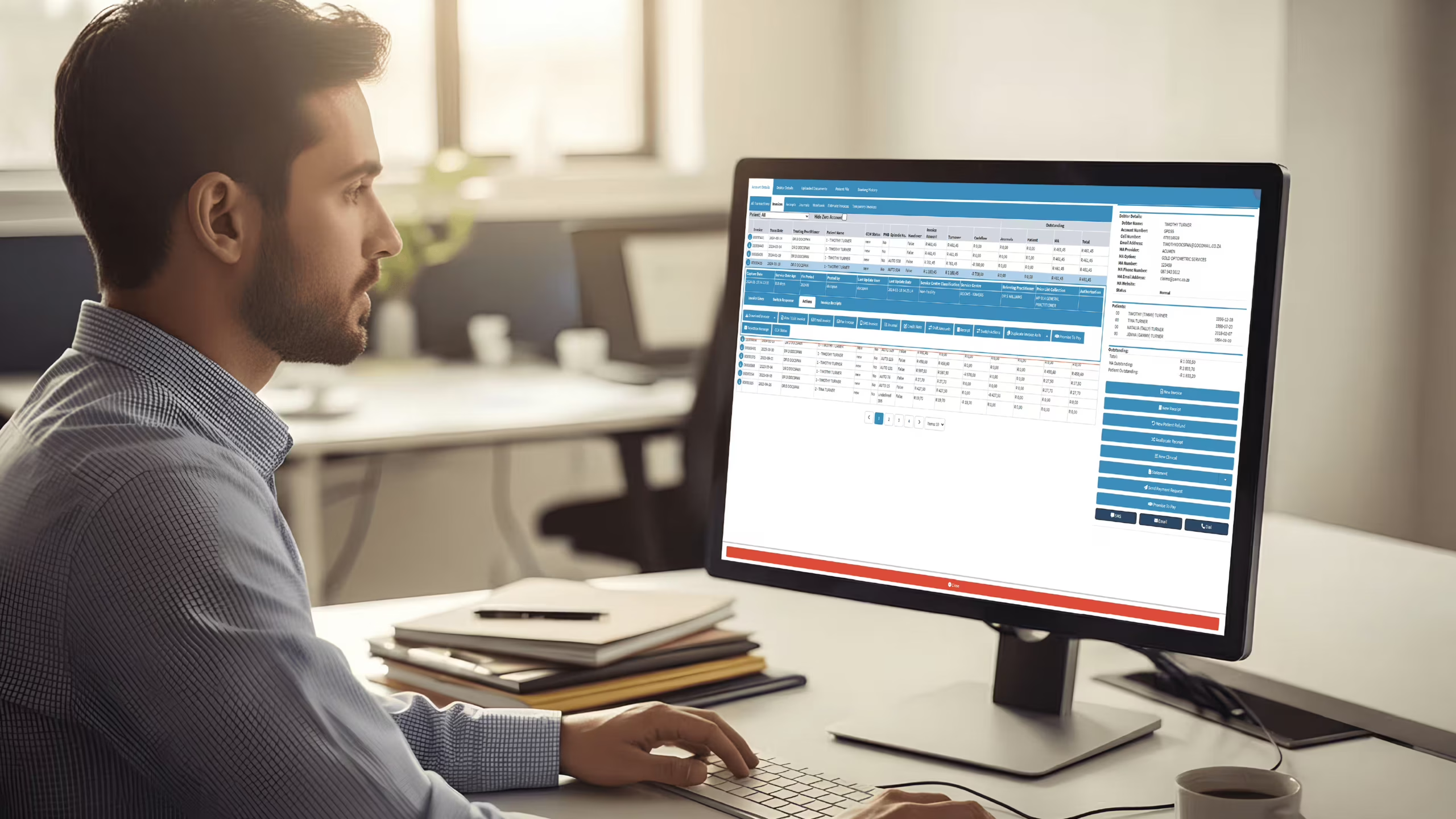
Billing and coding programs convert clinical services into the standardised codes that insurance companies and government payers use to process claims. On the coding side, this means mapping diagnoses to ICD-10-CM codes and procedures to CPT or HCPCS codes. On the billing side, it means packaging those codes into claims, submitting them electronically, tracking their status, and reconciling payments against posted charges.
The two functions are closely related but distinct. Some practices use separate dedicated tools for coding and billing, while others use integrated platforms that handle both within a single workflow. The latter approach reduces the risk of information getting lost between steps and makes it easier to audit the full claim lifecycle from initial code assignment to final payment posting.
The Centers for Medicare and Medicaid Services maintains comprehensive coding guidelines that US practices must follow when submitting Medicare and Medicaid claims. Software that is regularly updated to reflect CMS changes reduces the risk of submitting claims with outdated codes.
Modern billing and coding platforms also incorporate claim scrubbing, which is an automated review process that checks each claim for errors before submission. Scrubbing catches common issues such as mismatched diagnosis and procedure codes, missing modifiers, and duplicate claim submissions. Practices that use claim scrubbing consistently see higher first-pass claim acceptance rates.
Medical Billing Software for Small Business Practices
Small and independent medical practices face a specific challenge when it comes to billing software: the tools designed for large health systems are often too complex and too expensive, while the most basic tools lack the capabilities a practice needs to manage a serious revenue cycle. Medical billing software for small business medical practices needs to hit a specific balance between functionality and usability.
The most important features for a small practice are clean claim submission, real-time eligibility verification, and straightforward payment posting. Eligibility verification is particularly critical. When a patient arrives, the software should confirm their insurance coverage and benefits in real time, so the practice knows upfront what will and will not be covered before services are rendered.
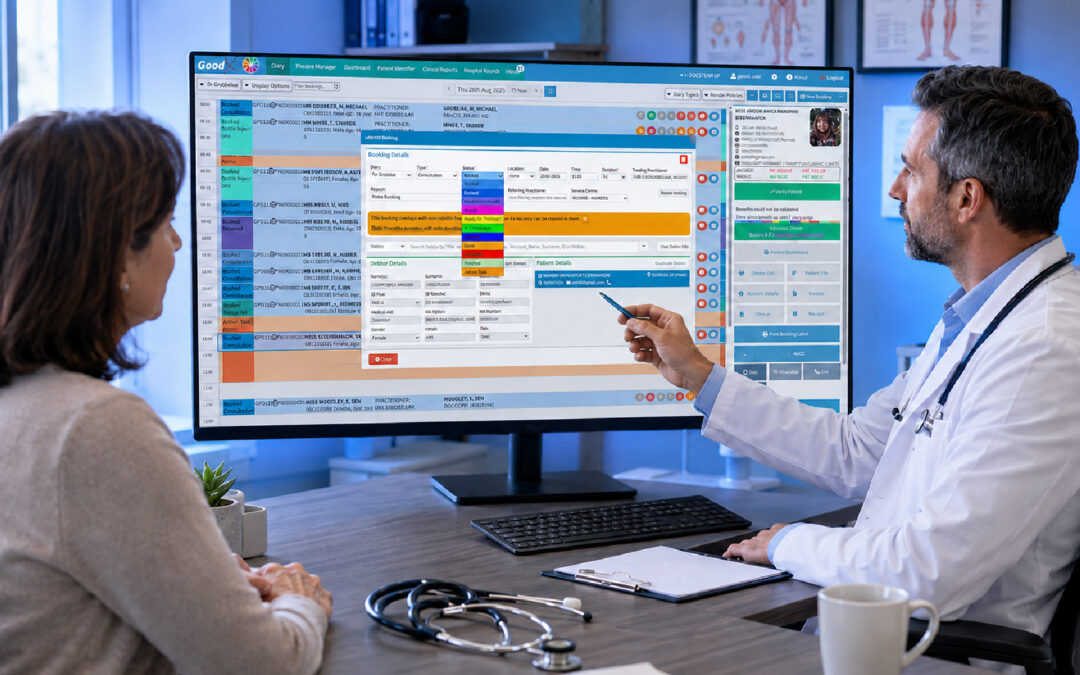
GoodX US offers a practice management platform built with smaller and mid-size practices in mind, combining billing, clinical records, and scheduling in a single system. This reduces the administrative overhead of managing multiple tools and gives small practice owners better visibility into their financial performance without requiring a dedicated billing team.
Payment processing capabilities have also evolved significantly for smaller practices. Modern platforms support multiple payment channels, including patient payment portals, automated payment plans, and electronic remittance advice processing. These features reduce the time staff spend chasing outstanding balances and improve the overall patient payment experience.
The American Academy of Family Physicians provides guidance on practice management best practices for small to mid-size physician practices, including advice on selecting billing and coding platforms that align with practice size and specialty needs.
Online Billing and Coding Programs: Cloud vs On-Premise
The shift toward cloud-based platforms has fundamentally changed how practices access and manage their billing and coding software. Online billing and coding programs hosted in the cloud offer several practical advantages over traditional on-premise installations, particularly for practices without a dedicated IT department.
Cloud-based platforms are updated automatically by the vendor, which means your coding tables, payer rules, and compliance requirements are kept current without requiring manual installations or IT support. They also allow access from any location with an internet connection, which is useful for practices with multiple locations or providers who review billing remotely.
HIPAA compliance is a non-negotiable requirement for any billing software used in a US practice. Cloud-based platforms must demonstrate that they meet HIPAA security standards for data storage, transmission, and access controls. Before selecting any platform, practices should review the vendor’s Business Associate Agreement and confirm their approach to data security and breach notification.
The U.S. Department of Health and Human Services outlines HIPAA security requirements that apply to electronic protected health information, including the safeguards that billing software vendors must implement to be compliant.
On-premise solutions give practices more direct control over their data and can perform well in environments with unreliable internet connectivity. However, they typically require more internal IT support and put more responsibility on the practice for maintaining updates and security patches.
Key Questions to Ask When Evaluating Billing Software
Before selecting a billing and coding platform, practices should ask: Does the software support all the payers your practice works with? How does the vendor handle coding updates when CMS releases new guidelines? What is the average first-pass claim acceptance rate among current users? What training and support resources are available after onboarding?
Integration with your existing EHR system is another critical consideration. When billing and clinical records are managed in separate, non-integrated systems, billing teams must manually extract information from the EHR to build claims. This introduces transcription errors and slows down the billing cycle. Integrated platforms that share data between clinical and billing workflows eliminate this bottleneck. Organizations like the Health Information Management Systems Society (HIMSS) emphasize that interoperability and data integration are essential for reducing administrative friction.
Frequently Asked Questions
What is the best software for medical billing and coding for US practices?
The best software for medical billing and coding depends on practice size, specialty, and existing technology. Key factors include HIPAA compliance, integration with your EHR, support for your specific payer mix, and claim scrubbing capability. Practices should evaluate multiple platforms through demos before committing to a long-term contract.
How do billing and coding programs work?
Billing and coding programs convert clinical documentation into standardised codes, package those codes into claims, submit them electronically to payers, and track payment status. Most platforms also include claim scrubbing, eligibility verification, and accounts receivable management tools to support the full revenue cycle.
What medical billing software is best for small practices?
Small practices benefit most from integrated platforms that combine billing, scheduling, and clinical records in one system without requiring a large IT investment. Cloud-based options that offer per-provider pricing and full HIPAA compliance are generally the most practical choice for independent and small group practices.
Are online billing and coding programs HIPAA compliant?
Most reputable online billing and coding programs are HIPAA compliant and should provide a signed Business Associate Agreement. Practices should verify that the vendor uses encryption for data storage and transmission, maintains audit logs, and has a documented breach notification process before selecting any cloud-based billing solution.
How does billing software improve claim acceptance rates?
Billing software improves claim acceptance rates through automated claim scrubbing, which checks each claim for errors before submission. It also maintains current coding guidelines, verifies patient eligibility in real time, and flags potential compliance issues before claims leave the practice. Together, these features significantly reduce first-pass denials.
Take the Next Step with GoodX
Software for medical billing and coding that is HIPAA compliant, integrated with your clinical records, and built to reduce denial rates is the foundation of a financially stable US medical practice. GoodX US gives practices a complete platform that handles billing, coding, scheduling, and clinical management in one place.